
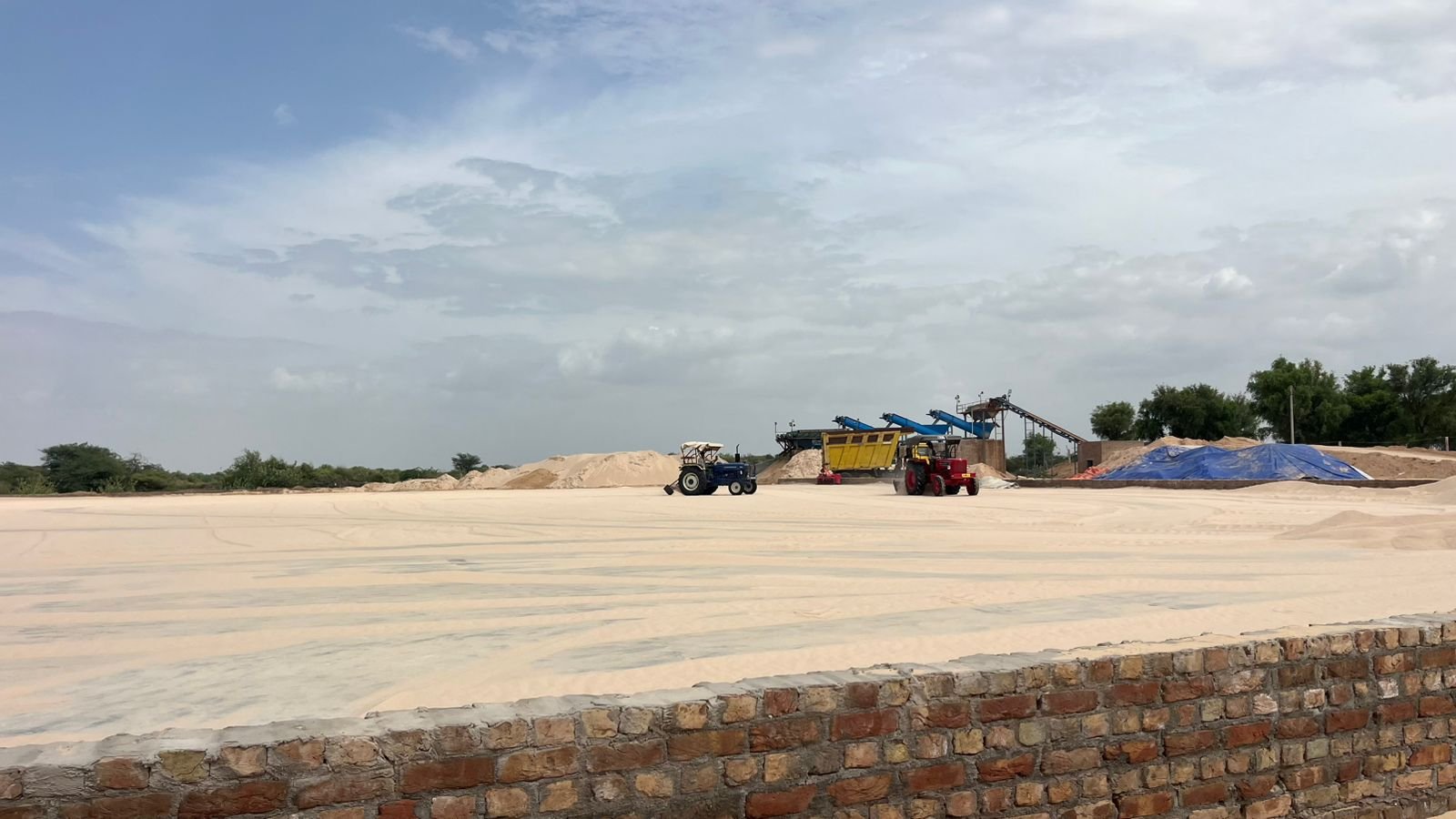
Minerals That Build India: The Foundation Behind Modern Infrastructure
When we think about highways, smart cities, bridges, factories, glass towers, ceramic tiles, or even the paint on our walls, we rarely think about minerals. Yet behind every modern structure lies a foundation built on carefully processed industrial minerals. From gypsum and lime to silica sand and calcite, these materials quietly power the growth of infrastructure, manufacturing, and agriculture across India.
At Bigrock Mines & Minerals, we believe that minerals are not just raw materials — they are the backbone of development. Let’s explore how industrial minerals play a transformative role in shaping modern India.
The Hidden Strength in Construction
Construction is one of the largest consumers of industrial minerals. Materials like Gypsum Powder, Plaster of Paris (POP), Quick Lime, Hydrated Lime, Calcite, and Dolomite are essential in creating durable, smooth, and structurally sound buildings.
Gypsum regulates the setting time of cement. Without it, cement would harden too quickly to be workable. Plaster of Paris is widely used in false ceilings, decorative moldings, and interior finishes because of its smooth texture and quick setting properties. Quick Lime and Hydrated Lime are used for soil stabilization in road construction, improving load-bearing strength and reducing moisture sensitivity.
Silica Sand strengthens concrete mixes and is used in plastering and masonry. Calcite and Marble Powder improve surface finish in wall putty and paints. These minerals may not be visible in the final structure, but they determine its strength, durability, and aesthetic appeal.
In short, infrastructure does not rise from steel and cement alone — it rises from carefully engineered mineral compositions.
Ceramics, Tiles & Sanitaryware: Precision Through Clay
India’s booming real estate and renovation sectors have driven enormous demand for ceramic tiles and sanitaryware. Ball Clay and China Clay (Kaolin) are the unsung heroes of this industry.
Ball Clay provides plasticity — the ability to shape and mold ceramic products without cracking. It helps tiles and sanitaryware retain form during drying and firing. China Clay contributes whiteness, smoothness, and thermal stability, ensuring a refined finish after firing.
Silica Sand plays a role here too, controlling shrinkage and improving thermal resistance. Dolomite enhances strength and clarity in ceramic glazes.
Every bathroom basin, floor tile, and porcelain tableware item owes its form and finish to the right blend of mineral science.
Steel & Metallurgy: The Chemistry of Strength
Steel plants rely heavily on minerals such as Quick Lime and Dolomite. During the smelting process, lime acts as a fluxing agent — a material that removes impurities like sulfur, phosphorus, and silica from molten metal. This ensures the final steel product is strong, clean, and structurally reliable.
Dolomite helps protect furnace linings and contributes magnesium, which improves slag formation and stability. Without these minerals, steel production would be inefficient and inconsistent.
This is a reminder that industrial progress is not only about machinery and technology. It is about chemical precision — and minerals are the quiet chemists behind the scenes.
Glass Manufacturing: Purity Matters
High-purity Washed Silica Sand is the foundation of the glass industry. When combined with soda ash and limestone, it forms the basis of flat glass, container glass, solar panels, and even fiber optics.
The purity of silica is crucial. Even small traces of iron can alter the clarity and color of glass. That is why consistent grading, washing, and quality control are essential in silica processing.
From the windows in skyscrapers to the bottles in pharmaceutical packaging, silica sand enables transparency — literally and industrially.
Agriculture & Soil Health: Building from the Ground Up
Industrial minerals are not limited to factories and buildings. They also nurture the soil that feeds the nation.
Gypsum improves soil structure in alkaline and sodic soils by replacing sodium with calcium. Hydrated Lime balances soil acidity and supplies essential calcium nutrients. Dolomite provides both calcium and magnesium, promoting healthier crop growth.
Bentonite enhances water retention in sandy soils, helping farmers manage irrigation more effectively. Multani Mitti (Fuller’s Earth) is used in animal bedding and agricultural applications due to its absorbent properties.
Healthy soil equals better yields. Better yields strengthen food security. Once again, minerals are working quietly behind the scenes.
Paints, Plastics & Polymers: Performance Enhancers
Calcite Powder, Dolomite Powder, and China Clay are widely used as fillers and functional additives in paints, plastics, and rubber products.
In paints, these minerals improve opacity, brightness, and surface smoothness while reducing formulation costs. In plastics, they enhance stiffness, thermal resistance, and dimensional stability. In rubber, they improve tensile strength and durability.
Industrial minerals are not merely fillers; they are performance enhancers that allow manufacturers to create stronger, smoother, and more efficient products.
Water Treatment & Environmental Applications
Hydrated Lime and Quick Lime are widely used in water treatment plants to adjust pH levels and remove impurities. Bentonite helps in wastewater treatment by absorbing toxins and heavy metals. Silica sand forms the base of filtration systems in water purification plants.
Environmental protection also relies on minerals. Lime-based systems help neutralize harmful gases like sulfur dioxide in industrial emissions. These applications demonstrate how minerals contribute not only to development but also to sustainability.
The Advantage of Integrated Mining & Manufacturing
In today’s competitive industrial landscape, consistency is everything. Industries cannot afford irregular mesh sizes, fluctuating purity levels, or delayed supplies.
An integrated approach — where mining, processing, quality testing, and packaging are handled in-house — ensures full control over quality and performance. From extraction to final dispatch, every stage must be monitored carefully.
Strict laboratory testing for chemical composition, moisture content, particle size distribution, and whiteness ensures reliability. Proper packaging protects material integrity during transport. A strong logistics network ensures timely delivery across industrial hubs.
When these elements work together, minerals transform from raw rock into engineered industrial solutions.
Minerals: The Foundation of Progress
India’s growth story is built on infrastructure expansion, manufacturing strength, agricultural productivity, and technological innovation. At the heart of each of these sectors lies a group of materials that rarely receive public attention — industrial minerals.
They regulate cement setting time.
They strengthen steel.
They shape ceramics.
They purify water.
They improve soil.
They enhance paints and polymers.
They quite literally build the nation.
As India continues to urbanize and industrialize, the demand for high-quality, precisely processed minerals will only grow. Behind every bridge, building, factory, and field stands the science of mineral engineering.
Minerals may begin as natural deposits in the earth, but through responsible mining, advanced processing, and rigorous quality control, they become the invisible force driving modern progress.
And that is why the phrase “Minerals That Build India” is not just a slogan — it is an industrial truth.
